

Nutritional Tensegrity
An alternative framework of nutritional balance.

Nutrition science operates with the implicit perspective that there is only one way in which nutritional adequacy can be met. This concept is codified in the omnipresent notion of recommended daily intakes, where each nutrient acts alone to fill its respective bucket. Only when one’s intake for each nutrient is sufficient can nutritional balance be reached — a static goal. But this perspective has problems. Complex systems are not static. They are intelligent and dynamic, integrating subtle information from their surroundings to establish novel quasi-stable states.1 Modern nutrition theory treats the body’s response to nutrients as isolated and linear, forcing a conception where there is but one steady-state. Such reductionistic concepts fail to acknowledge the possibility of reaching nutritional balance via divergent paths.
“[Intelligence is] a fixed goal with variable means of achieving it.”
— William James
Nutrient tracking software emphasises this misnomer well. Each nutrient is represented by its own bucket that fills up with the food data entered. Of course, the assumption is that nutritional balance is achieved when all buckets have been sufficiently filled. However, in this model, none of the nutrients interact in any way. Each component is assumed to have no feedback mechanisms that influence the requirements of others. Using such methods to define nutritional balance is analogous to listening to Beethoven’s 7th Symphony, but only one instrument at a time, only to then claim you understand the piece as a whole. How is it possible to conceptualise nutritional balance where the potential for complex interactions is obfuscated?2
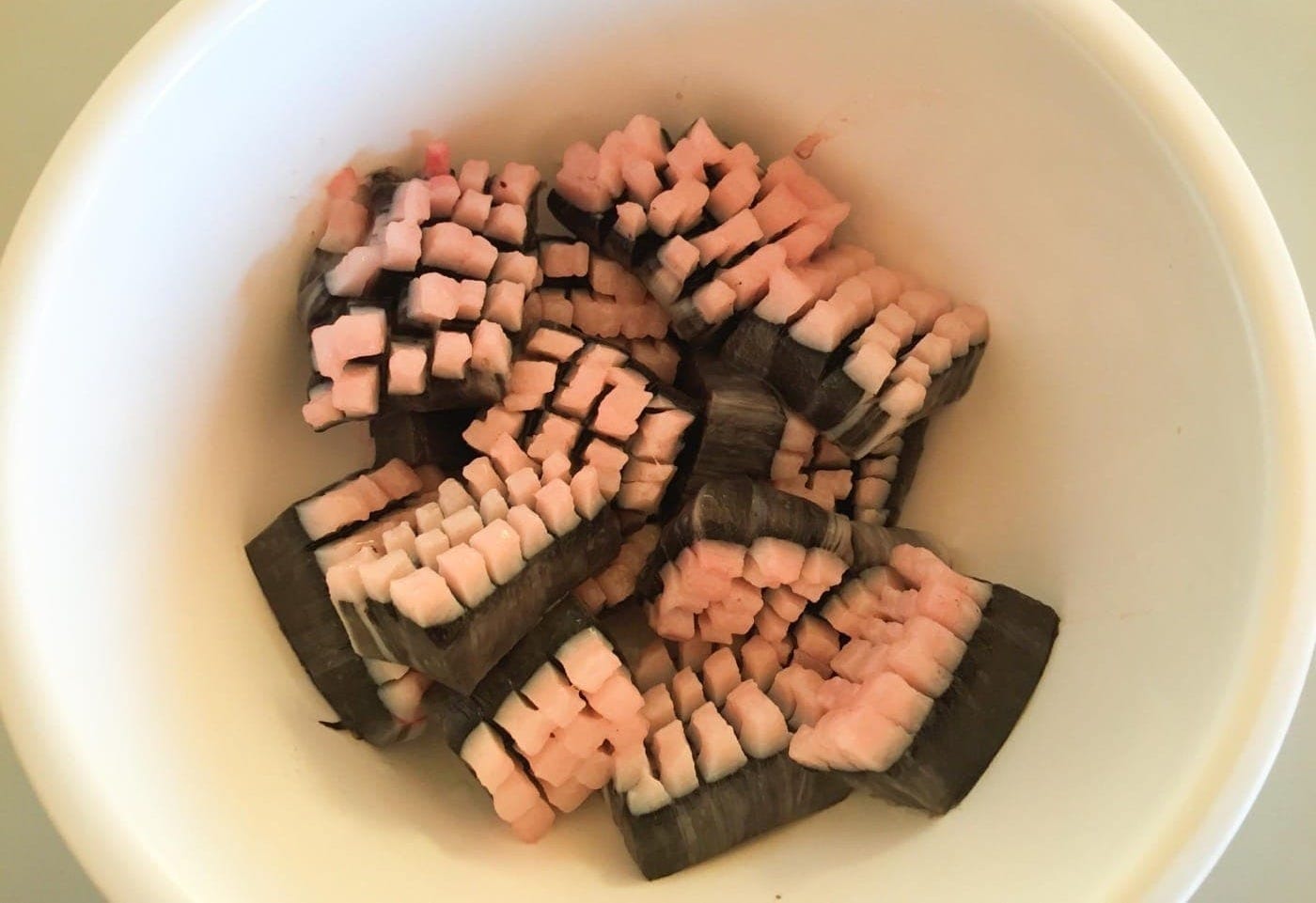
A poignant example of where the current model fails is scurvy. Between the 16th and 18th century, the devastating disease afflicted many sailors stuck at sea for months at a time. Without fresh produce, they had no access to vitamin C-rich foods, leading to collagen breakdown, delirium and death. However, there are traditional populations (and people today) who survive largely on flesh foods without succumbing to scurvy. How can this be? It is likely that, under specific conditions, vitamin C requirements shift. In the context of a low carbohydrate dietary pattern, the metabolic patterns reorganise, potentially reducing the need for ascorbic acid.3 This phenomena implies that nutrient requirements are not static and shift as a function of the whole diet pattern.
“Nature never stoops to a perfect correlation.”
—Nick Lane
Many nutrient relationships are well documented. Zinc-copper antagonism, omega-3 to omega-6 ratios and electrolyte balance are intimations of a deeper, more complex perspective of nutrition. Unfortunately, even these fall into typical linear, lever-pulley-style categorisations without further integration into a broader nutrient interaction system.4 The merging of these known nutrient interactions into a more holistic, tensegrity-inspired model prevents reductionism.
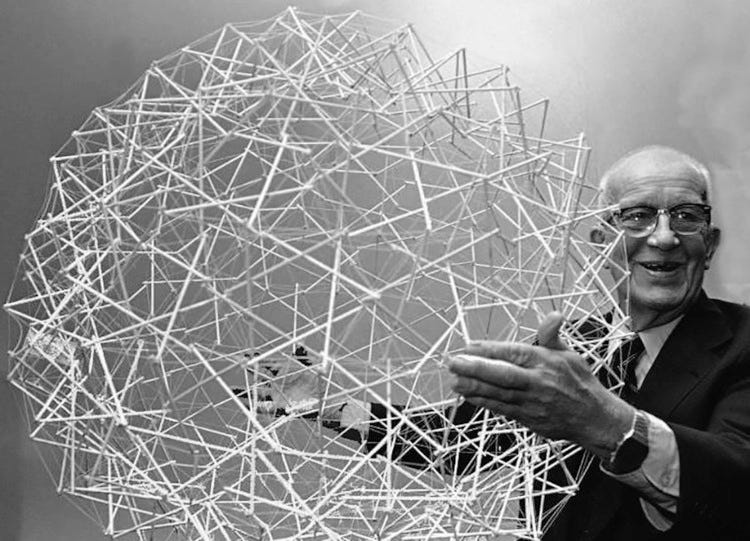
Tensegrity is a term coined by famous architect Buckminster Fuller by joining the terms tensional and integrity. Tensegrity structures exhibit nonlinear dynamics and are chaotic — features that facilitate efficient distribution of stress.5 Their response to perturbation is not limited by locality, but rather spread out to each node of the entire structure. This allows tensegrity structures to be stable in a multitude of states. For this reason, the concept of tensegrity could serve as a framework for understanding the rich domain of connections between nutrients and even beyond.
“[Dynamic fractalisation] allows an imposed constraint to be absorbed at all levels of living matter.”
— Jean-Claude Guimberteau
Here, I offer an alternative view where nutritional requirements shift as a function of the whole dietary pattern. Rather than static requirements, a tensegrity-inspired model allows for the existence of multiple balanced states, where nutritional adequacy can be achieved in a variety of ways. This is accomplished through the tensegrity-like behaviour of nutritional constituents, where each element is simultaneously influenced and influencer within the dynamic web of metabolic interactions. Such interactions also couple to environmental signals, denoting that nutritional balance cannot be assessed without the context of one’s unique surroundings, by definition.
Under some circumstances, one’s requirement for specific nutrients may shift dramatically. In the context of a ketogenic-style diet, perhaps calcium demands are lower than they would be in a general population. It may be that those that are exposed to more sunlight have an increased capacity for carbohydrate metabolism, but simultaneously require more folate. Perhaps pork has become the meat of choice in many regions reliant on polished rice due to the thiamin content. It may even be that the antagonisms of chlorine and fluoride extend well beyond iodine through this complex network of interactions.
This view presents a framework through which we can understand how a diversity of natural dietary patterns can all support nutritional balance, despite their distinct nutritional attributes. It also generates a novel perspective on nutritional supplementation — particularly supraphysiological dosing. When implementing isolated, concentrated nutrients, what you are essentially doing is applying significant pressure on a single node in the nutritional tensegrity structure. Not only is that nutrient shifted, but every other nutrient in the system is modulated by force. These system-wide changes are often unpredictable, occasionally producing the opposite of the desired effect.6 From this perspective, we can begin to understand that high-dose supplementation, rather than simply addressing an insufficiency, is actually toggling the entire tensegrity structure through perturbation.7
“We predict ‘A’ or ‘B’, but Nature tends to present us with ‘C’”
— Roman Zubarev
The core idea of nutritional tensegrity extends to all biochemical processes in the body — not just those associated with nutrients. Nutrients interact with hormones which interact with cytokines which interact with membrane potentials which influence interfacial water etc, etc. Add the richness of biochemical individuality to this and you can begin to appreciate the complexity of these interactions. Ultimately, the cumulative actions within the body, both biochemical and biophysical, can be understood through the lens of tensegrity. Interconnectedness, bidirectional feedback and dynamic adaptation are not luxuries complex systems have evolved post-hoc, they are the very substrate of self-organising, coherent activity itself.
To understand nutrition is to appreciate the rich network of interactions to which nutrients belong. The failure to incorporate frameworks based on features of complex systems condemns the field to one that sees the human body fundamentally as machine-like. At its worst, these machine analogies provide anti-useful facts — ones fixed on a false north star.
“Nutrition science has been virtually devoid of theory… Despite all the experimental work, and many hypotheses, a conceptual framework has been singularly lacking.”
— Stephen J. Simpson
Key Concepts
Nutrients interact with each other, forming a highly integrated web where each node is simultaneously influencing and influenced by each other node. Such interactions are complex, leading to nonlinear interactions and unpredictable outcomes.
Nutrient requirements shift as a function of the entire diet patterns as well as the other environmental signals that influence the state of the organism.
Nutritional balance can be achieved in a multitude of ways, there is no fixed target as standard nutrition science suggests.
Tensegrity structures serve as a key model in understanding the interactions between not only nutrients, but all biochemical interactions. By visualising nutrients as nodes of a tensegrity structures, it becomes simple to grasp how a perturbation in one regions necessarily influences the structure as a whole. Tensegrity structures are highly adaptive, distributing stress efficiently throughout the highly integrated complex. In a similar way, shifts in some nutrients may be compensated by others — a basis for multiple states of balance.
This model is intimately related to a hypothesis of environmental signal coupling. As such, nutritional tensegrity can be considered an extension of this idea.
Related Articles


Related Podcasts
Jean Claude Guimberteau: The Extracellular Matrix, Biotensegrity & Order From Chaos
David Raubenheimer & Stephen Simpson: Nutritional Geometry & The Protein Leverage Hypothesis
Post-Script
Over my 5 years of tertiary education in nutrition, the insistence that there is but one way to achieve nutritional balance remains a concept that I feel particularly holds the field back. It actively promotes the idea that nutritional balance is a fixed point — one that is reached by linear and additive methods. The term ‘balance’ is fraught with danger. In reality, balance in a complex system is achieved through change, not stasis. It is unconscionable, in my estimation, to present dietary guidelines that, if applied to ancestral dietary patterns, would label them inadequate or worse, unhealthy. How are we so unapologetically capable of engaging in such a fallacy as to think environmental conditions play no role in determining what nutritional adequacy is?
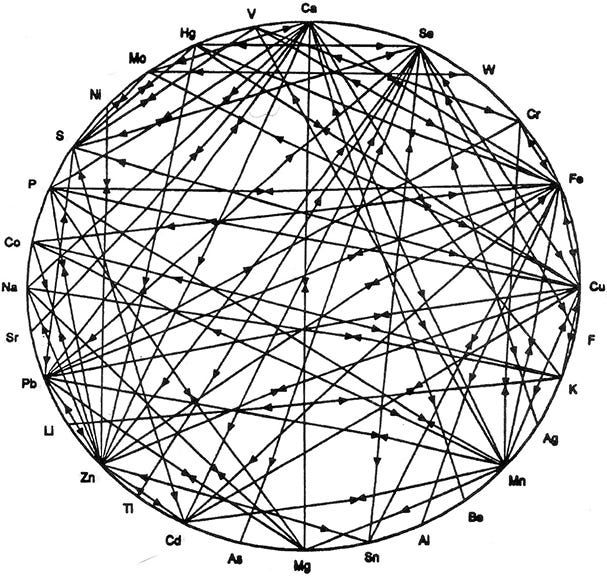
This framework lays a foundation for investigating why people who consume only meat do not succumb to the expected deficiencies, why supraphysiological doses of isolated, concentrated nutrients can have system-wide effects, why fasting or caloric restriction need not result in nutritional depletion. Nutritional tensegrity allows for questions of this nature to be explored faithfully — no sacred cows need to be sacrificed. Personally, I think the field of nutrition cannot move forward until a fundamental shift occurs where we have a way of understanding nutrition as a whole, contextualised by the environment in which it is consumed. The implications of the Mulder Wheel alone are worth more than 5 years of university level education in nutrition.
Quasi-stability is emphasised by the term, allostasis. Unlike homeostasis, it highlights that a system’s stability is achieved through dynamic change, not by pursuing a single fixed point. I have expanded on this idea in “Environmental Signal Coupling: A hypothesis of how life is informed and curated.”
It may actually be worse than ignorance. Ignorance implies that the possibility of complex interactions was considered and deliberately omitted. It is more likely that these models are a consequence of Western thought where humans are fundamentally machine-like, leaving no room for even the conceptualisation of complex, nonlinear interaction.
Sailors would not have been afforded this shift in metabolic policy as they had to survive largely on non-perishable grain products, rich in carbohydrates. Evolutionarily, access to carbohydrates would have been coupled with vitamin C. We likely evolved to use vitamin C when carbohydrates were plentiful, and compensate for its lack in the metabolic shifts of more ketogenic-style diet patterns. Environmental signals yoke together.
Good practitioners of HTMA are among few who value the importance of nutrient relationships. Hair tissue mineral analyses must be read as a symbol, rather than a series of individual nutrient statuses. In interesting analogy for this is the incredible fact that the sum of all natural numbers (1+2+3+4… etc.) is equal to -1/12. Of course, intuitively, this is wrong — the sum of all natural numbers tends towards infinity. It turns out that in the same way that the √-1 is extraordinarily useful in the field of mathematics (despite the fact that typing it into a calculator would provide a syntax error), the answer -1/12 is really a symbol. These symbols can be used to reach deeper truths, even if they themselves defy logic. The relative values on a HTMA are symbols, not raw truths. When applied correctly, they can theoretically be used to identify underlying metabolic patterns.
Our fascia is a tensegrity structure. In fact, it is a series of tensegrity structures integrated at lower and lower domains — a dynamic fractal. This allows our bodies to absorb stress and distribute it system-wide. Jean-Claude Guimberteau’s book, “Architecture of Human Living Fascia” is seminal in this topic. See our podcast conversation here. See also his wonderful documentary, “Strolling Under the Skin”.
I have experienced this personally after supplementing zinc and copper several years ago. After 6 weeks of relatively high dosing, both my plasma zinc and serum copper dropped compared to my baseline measure at the beginning of the supplemental period. Linear thinking would suggest that both should have increased as I ‘filled their buckets’, so to speak. However, the dynamic nature of the nutritional tensegrity system feeds back in ways we don’t always understand. This is where supplementation can be detrimental.
High dose thiamin (vitamin B1) is a good example of this. Sometimes up to 300mg/day (RDI is ~1.2mg/day) is used to treat dysoautonomia and related syndromes. Is this really only affecting thiamin status? I think a much more likely explanation of the effects lies in how such high doses influence the nutritional connections as a whole, sometimes providing net-positive outcomes. I suspect, however, that such net-positive outcomes of such suprahphysiological approaches are a symptom of how disconnected from our natural environments we are in the modern world, rather than being a feature inherent to the therapeutic approach.