How Physical Acitivity Regulates Deuterium
Mechanical stress, isotope kinetics & bone strength.

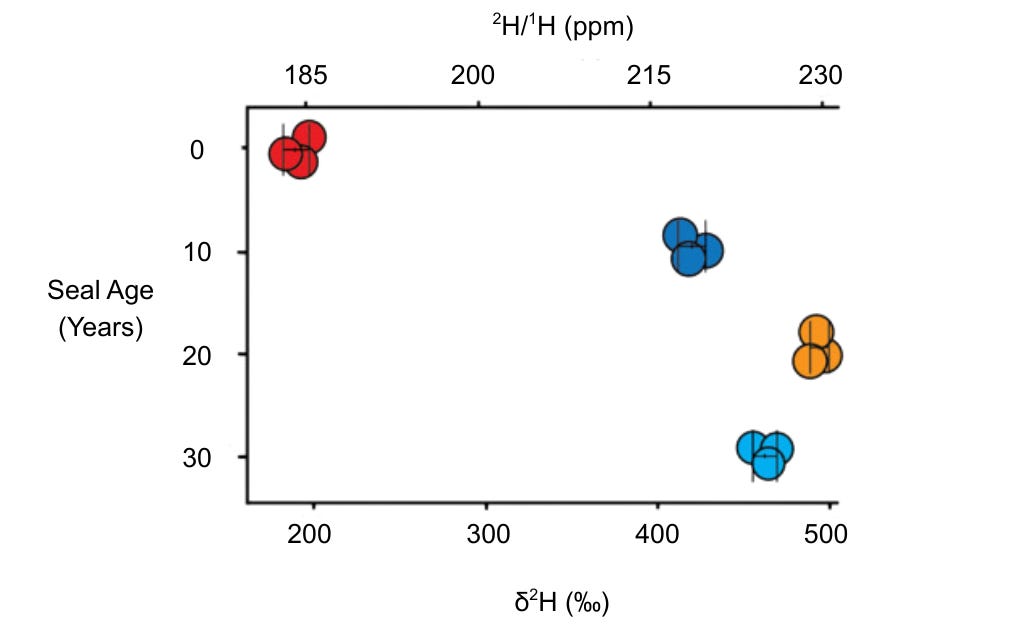
In 2022, a fascinating article was published that examined the unusual and highly unexpected deuterium content of animal bone collagen.1 The researchers investigated the deuterium content of proline and hydroxyproline residues in the bone collagen of grey seals and peregrine falcons. What they found was that these highly abundant amino acids of the collagen matrix of bone exceeded 300ppm — approximately double the abundance in seawater (~155ppm), and by far the highest deuterium concentration ever documented in natural biological tissues. The anomalous enrichment of the bone tissue could not be explained by the diets of these animals2, which leads to the question: how could such a significant enrichment occur in bone collagen?

This choice of animal in this investigation is significant. Both the peregrine falcon and grey seal experience extraordinary physical stress loads in their hunting methods, with peregrine falcons being the fasted animal on Earth. Intriguingly, bone sample of infant grey seals did not exhibit the stark enrichment signatures that adult seals displayed, with older seals having the highest bone-deuterium content. These findings suggested that whatever mechanism drove this phenomena was age-dependent, and not caused by the deuterium content of the diet. Intriguingly, the bone collagen content of polar bears — who’s primary food source is seals — is significantly lower than the seal bones.
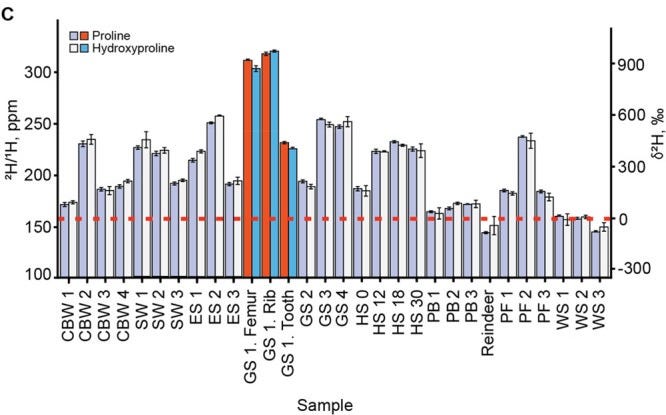
Other amino acids in the bone collagen tended to also be enriched, but markedly less than proline and its derivative, hydroxyproline. Thus, the vast majority of deuterium enrichment in bulk bone tissue is concentrated in specific amino acids rather than being uniformly distributed. This suggests that a particular process preferentially acts on these amino acids to place deuterium on them selectively. The biosynthetic pathway of proline involves glutamate or ornithine — both amino acids that are not enriched to high degrees in the bone collagen of grey seals. This makes it highly unlikely that proline’s enrichment in deuterium is governed by isotopic effects in metabolic pathways. To come up with a reasonable hypothesis to explain this phenomena, the researchers directed their attention to something else — mechanical stress.