Daisyworld
System diversity and resistance to perturbation.

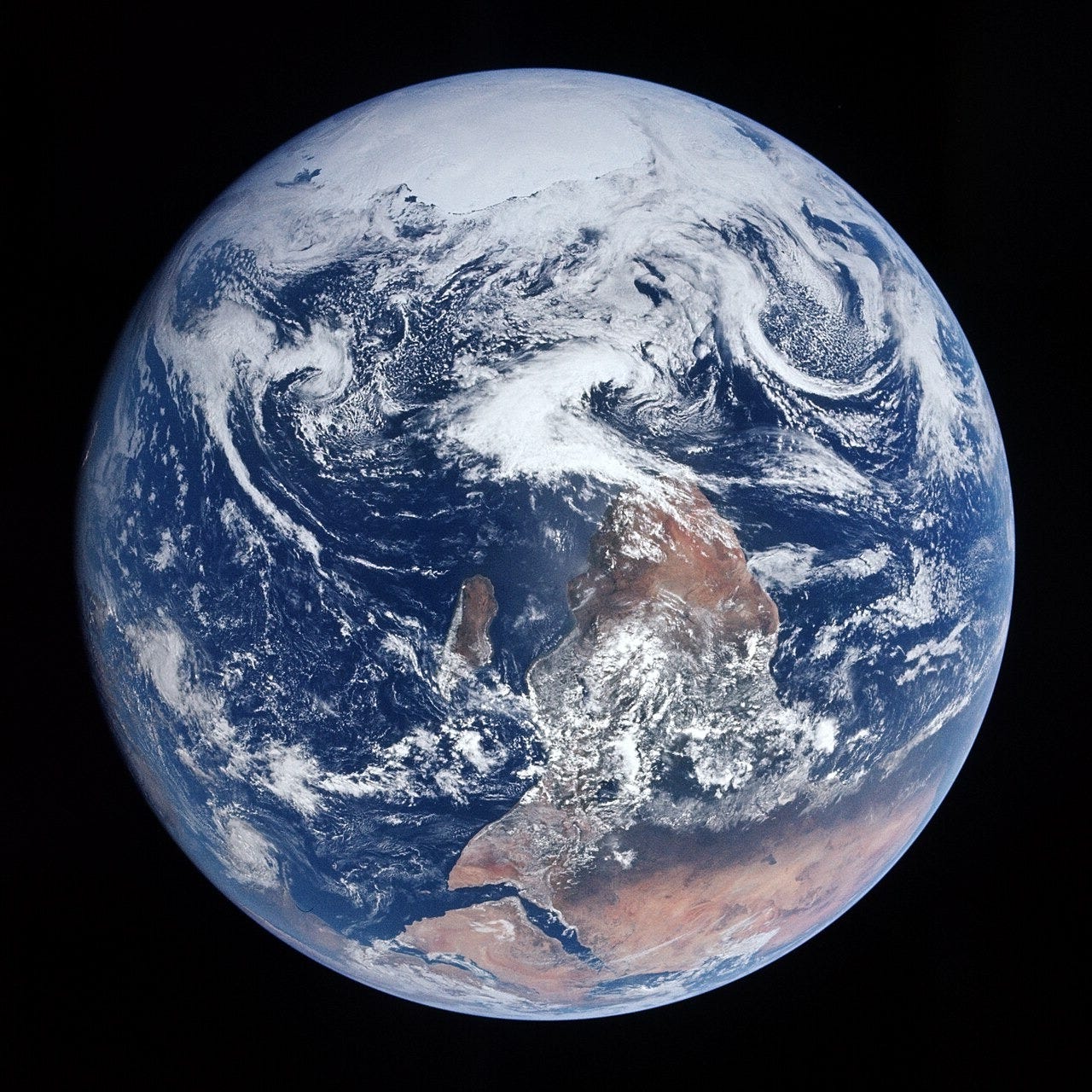
Is the Earth alive? At first this seems like an odd question; on the scale of a human, our planet appears static and without agency. But only relatively recently in human history would the notion of an inanimate Earth be accepted, scarcely even being considered as a contentious issue. Ancient Greeks had Gaia, Egyptians had Geb — before our gradual self-displacement from the natural world, human cultures could not help but see the Earth as living, responsive and dynamic, as we ourselves are living, responsive and dynamic.
Before science began the gradual descent into sub-specialities and further reduction of broader fields of exploration, it was possible to simply be a ‘scientist’, capable of raising questions in disparate fields, tying seemingly unconnected ideas together. In the 1970’s, career scientist James Lovelock was invited to NASA’s Jet Propulsion Laboratories to help devise novel methods for identifying life on other planets. In a moment of insight, he realised that an atmosphere in chemical disequilibrium could serve as a cardinal indication of the interconnected relationships present in a biosphere. His aptly named Gaia Hypothesis that followed was bold, suggesting that the Earth exhibits regulatory influence by its interactions with biological systems. Of course, his idea was ridiculed; how could the Earth be ‘alive’?
“Earth may be alive: not as the ancients saw her--a sentient Goddess with a purpose and foresight--but alive like a tree. A tree that quietly exists, never moving except to sway in the wind, yet endlessly conversing with the sunlight and the soil. Using sunlight and water and nutrient minerals to grow and change. But all done so imperceptibly, that to me the old oak tree on the green is the same as it was when I was a child.”
—James Lovelock
Unperturbed, Lovelock produced some of the most beautiful, elegant and simple models to describe the relationship between our Earth — Gaia — and its inhabitants. These simulations are called Daisyworld.